Taekwondo to Muay Thai | 8 Reasons Why the Transition Works

Taekwondo to Muay Thai- 8 Reasons Why Transitioning Is Effective

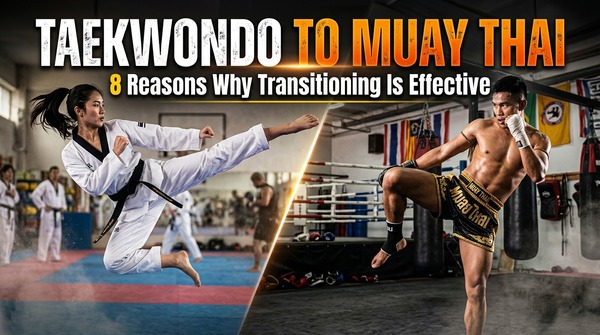
Transitioning from Taekwondo to Muay Thai can be an effective way for martial artists to expand their striking skills. While the two martial arts have significant differences, they also share several techniques and concepts that can make the transition smoother.

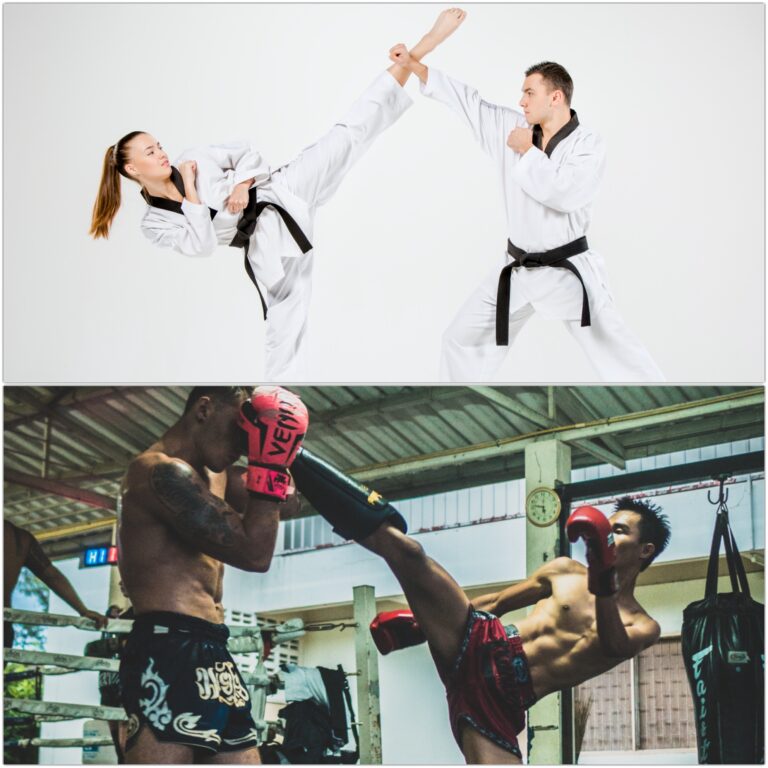
Taekwondo places a strong emphasis on kicking techniques, speed, flexibility, and movement. Muay Thai, on the other hand, incorporates punches, kicks, knees, elbows, and clinching to create a more complete striking system.

Because of these similarities, Taekwondo practitioners can bring several useful skills with them when they begin training in Muay Thai.

Here are 8 reasons why transitioning from Taekwondo to Muay Thai can be effective.

Taekwondo to Muay Thai- Front Kick

1. The Taekwondo Push Kick Applies

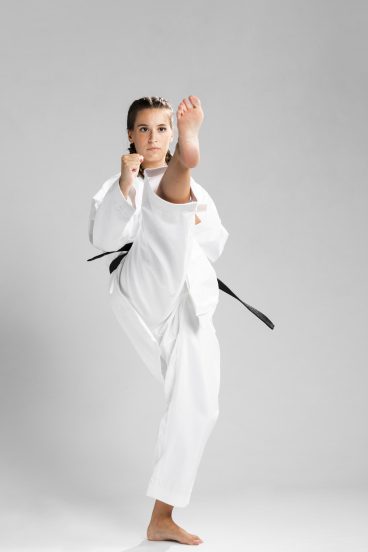
Taekwondo places a significant emphasis on kicking, which gives practitioners a strong foundation for learning the kicking techniques used in Muay Thai. One technique that can transition particularly well is the push kicks, which is commonly known as the teep in Muay Thai.

Taekwondo practitioners who already have experience with push kicks may find it easier to understand the basic mechanics of the Muay Thai teep. The biggest adjustments often involve learning how to use the technique within Muay Thai’s overall fighting style.

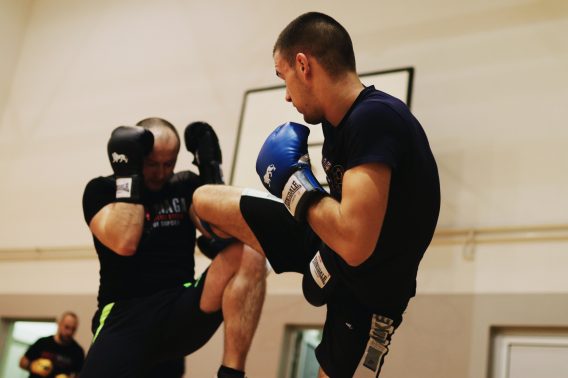
The teep can be used to maintain distance, disrupt an opponent’s balance, stop forward pressure, and create opportunities for other strikes.

A Taekwondo background can therefore give practitioners a useful starting point when developing their Muay Thai push kick.

Taekwondo to Muay Thai

2. The Roundhouse Kick Is Relevant

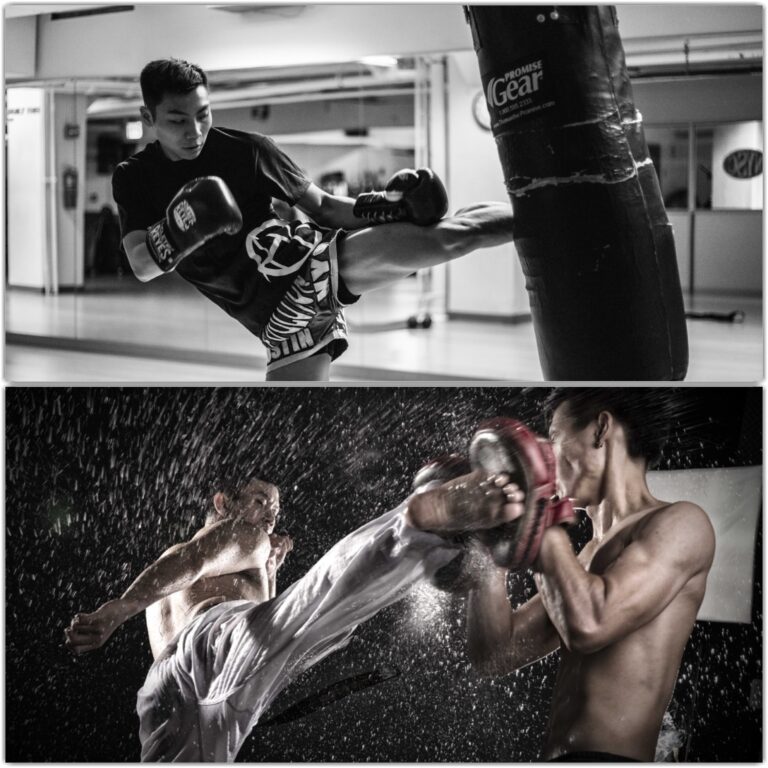
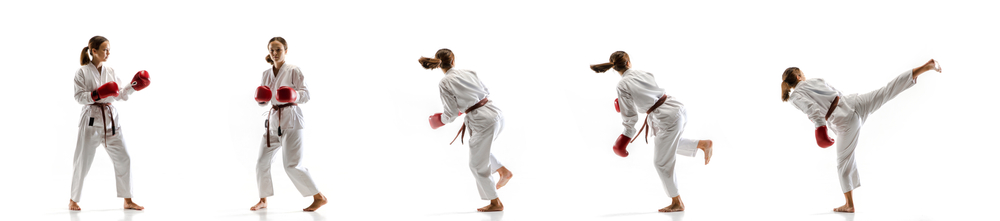
Another Taekwondo technique that can transition well into Muay Thai is the roundhouse kickThe mechanics are not exactly the same. 

Taekwondo roundhouse kicks are often performed with a faster, snapping motion, while the Muay Thai round kick generally emphasizes greater hip rotation and power, with the shin commonly being used as the primary striking surface.

Despite these differences, Taekwondo practitioners already have experience with the basic movement pattern of a roundhouse kick.

The biggest adjustment may be learning how to generate more power through hip rotation and becoming comfortable striking with the shin rather than relying primarily on the foot.

Once those adjustments are made, a Taekwondo practitioner can potentially turn an existing kicking skill into a powerful Muay Thai weapon.

Taekwondo to Muay Thai- Taekwondo Feint

3. The Lead Leg Side Kick Can Be Useful

The lead sidekick is another technique that can be carried over from Taekwondo into Muay Thai.

A well-timed side kick can be effective for managing distance and stopping an opponent from aggressively moving forward. This makes it particularly useful against opponents who rely heavily on pressure and forward movement.

For a Taekwondo practitioner, the side kick may already feel natural because it is a familiar technique.

However, using it successfully in Muay Thai requires understanding when the technique is appropriate. Timing, distance, stance, and the opponent’s reaction all play an important role.

When used strategically, the lead side kick can become an unexpected tool within a Muay Thai striking arsenal.

4. Taekwondo's Feinting Skills Can Improve Muay Thai Striking

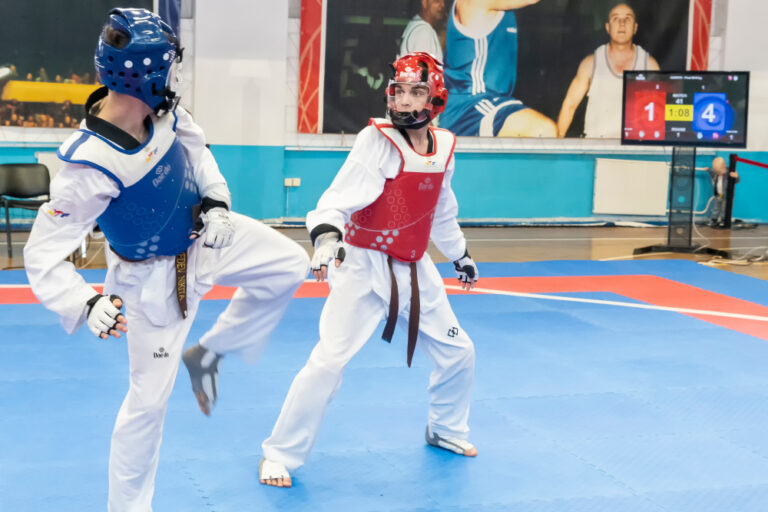
Feinting is an important part of striking, and Taekwondo practitioners can develop valuable experience with using kicks to create reactions from their opponents.

In Taekwondo competition, fighters frequently use fake attacks and quick movements to make opponents react. A fighter may begin the motion of a kick without fully committing to it, causing the opponent to defend or move.

That same concept can be valuable in Muay Thai.

A Taekwondo practitioner can use kicking feints to make an opponent raise their guard, check a kick, move backward, or otherwise expose an opening.

For example, a fighter might use a low-kick or body-kick feint to create an opportunity for a punch combination.

The specific techniques may change, but the ability to manipulate an opponent’s reactions can transfer effectively from Taekwondo to Muay Thai.

Taekwondo to Muay Thai- High Kick

5. High-Kick Flexibility Is a Major Advantage

One of the biggest advantages Taekwondo practitioners can bring into Muay Thai is kicking flexibility.

For many beginners learning Muay Thai, throwing a high kick can be challenging. Limited hip mobility, balance, technique, and flexibility can make it difficult to consistently reach an opponent’s head.

Taekwondo training often places considerable emphasis on flexibility and high kicks. As a result, practitioners with a Taekwondo background may already have the mobility and coordination needed to perform high kicks.

However, the technique still needs to be adjusted for Muay Thai.

A Muay Thai high kick typically involves different mechanics and power generation compared with a Taekwondo kick. Once the practitioner learns those differences, their existing flexibility can become a significant advantage.

Taekwondo to Muay Thai- Spinning Back Kick

6. The Spinning Back Kick Can Be an Unpredictable Weapon

The spinning back kick is another Taekwondo technique that can add an element of unpredictability to Muay Thai.

Because spinning attacks are less frequently used than conventional punches and kicks, an opponent may not expect them.

A well-timed spinning back kick can potentially catch an opponent while they are moving forward or attempting to close the distance.

However, this technique should not be relied upon constantly.

Spinning techniques require excellent timing, distance management, balance, and awareness. If the kick is poorly timed or misses, the fighter can put themselves in a vulnerable position.

For that reason, the spinning back kick is best viewed as a situational technique rather than a primary weapon.

Taekwondo to Muay Thai- Left Hook

7. Muay Thai Can Help Develop Taekwondo Practitioners' Boxing

Taekwondo includes punching techniques, but depending on the ruleset and competition format, punches may not be emphasized to the same degree as kicking.

This can make boxing development one of the biggest areas of growth when a Taekwondo practitioner begins training in Muay Thai.

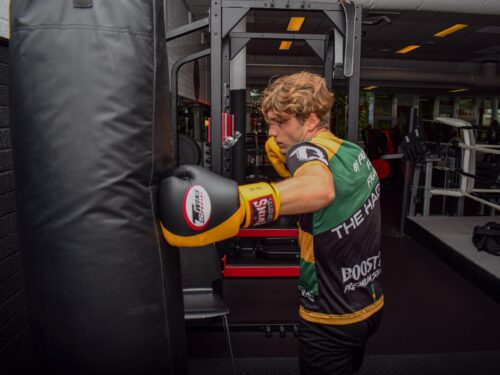
Muay Thai requires fighters to combine punches with kicks, knees, elbows, and clinching. Because of this, Taekwondo practitioners have an opportunity to significantly expand their hand striking.

Learning the Muay Thai stance, punching combinations, defensive techniques, and ability to transition between punches and kicks can make a Taekwondo-based striker much more versatile.

For example, instead of relying primarily on a kick to attack, a practitioner can learn to use punches to set up kicks or use kicks to create openings for punches.

This combination can make the fighter much more difficult to read.

Taekwondo to Muay Thai- Roundhouse

8. The Transition Can Create a More Well-Rounded Striker

Perhaps the biggest advantage of transitioning from Taekwondo to Muay Thai is the opportunity to combine the strengths of both martial arts.

Taekwondo can provide valuable experience with:

  • Fast kicking techniques
  • High kicks
  • Flexibility
  • Kicking combinations
  • Distance management
  • Feints
  • Spinning techniques

Muay Thai adds additional skills such as:

  • Boxing
  • Low kicks
  • Knees
  • Elbows
  • Clinching
  • Close-range striking
  • Defensive techniques

Muay Thai is often referred to as the “Art of Eight Limbs” because it utilizes the fists, elbows, knees, and shins as striking weapons.

When a Taekwondo practitioner adds these tools to an existing kicking skill set, the result can be a much more versatile striker.

Instead of abandoning their Taekwondo techniques, practitioners can learn how to adapt them to the demands of Muay Thai.

Conclusion

Although Taekwondo and Muay Thai have different techniques, rules, stances, and strategies, there are enough similarities for Taekwondo practitioners to bring valuable skills into their Muay Thai training.

Push kicks, roundhouse kicks, side kicks, feints, flexibility, and spinning attacks can all provide useful foundations. At the same time, Muay Thai can help Taekwondo practitioners develop stronger boxing, low kicks, knees, elbows, clinching, and overall striking versatility.

The transition may require adjustments, particularly with kicking mechanics, stance, distance, and the use of punches. However, a Taekwondo background can give a new Muay Thai practitioner several skills to build upon.

Ultimately, combining Taekwondo’s kicking abilities with Muay Thai’s complete striking system can help create a more well-rounded and unpredictable striker.

For martial artists considering the transition from Taekwondo to Muay Thai, the skills developed in Taekwondo do not have to be left behind. They can become valuable tools within a broader Muay Thai skill set.

Have you transitioned from Taekwondo to Muay Thai? What techniques from Taekwondo have helped your Muay Thai the most? Leave a comment and share your experience.

Share

5 thoughts on “Taekwondo to Muay Thai | 8 Reasons Why the Transition Works”

  1. Pingback: Thai Rounds | Reasons You Should Try it in Muay Thai

  2. Pingback: Judo in Brazilian Jiu-Jitsu | 8 Awesome Reasons to Apply - By: Mixed...

  3. Pingback: Giorgio & Armen Petrosyan | 5 Reasons to Attend Their Seminar - Mixed Martial Arts Lifestyle

  4. It’s fascinating to see how techniques from one discipline can seamlessly integrate into another, enhancing one’s striking abilities. Your breakdown of the similarities and differences between the two arts provides valuable guidance for those considering making the transition. Keep sharing your knowledge—it’s invaluable for martial artists seeking to broaden their skill set.

    1. Appreciate the feedback! Yes we agree that enhancing an individual’s striking abilities from one discipline to another is a fascinating thing to see and how it’s invaluable for them to seek development of their skill sets. I will definitely keep sharing more content about similar topics like this. More are being planned and in the works. Keep up to date with our postings on social media and you will see our future postings/updates.

Comments are closed.