 Skip to content

Muay Thai and Dutch Kickboxing are two powerful striking styles that complement each other extremely well. While they have similarities and differences, training in both can help develop a well-rounded striking style while improving physical conditioning, mental toughness, and overall resilience.
The art of Muay Thai places a strong emphasis on using the eight limbs—fists, elbows, knees, and shins—along with clinching, sweeps, and other close-range techniques. Dutch Kickboxing, meanwhile, is known for combining Western-style boxing combinations with powerful kicks and knees.
Both styles involve demanding training that challenges your body and mind. Consistently practicing pad work, bag work, partner drills, clinching, and conditioning can gradually make you more comfortable with physical discomfort and high-intensity training.
Here are 7 ways Muay Thai and Dutch Kickboxing can help toughen you up.
Table of Contents
How Muay Thai & Dutch Kickboxing Toughens You Up
1. You Learn to Handle Leg Kicks
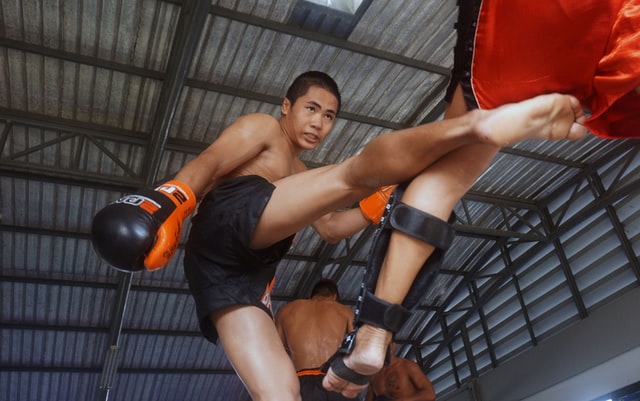
One of the biggest physical challenges in Muay Thai and Dutch kickboxing is dealing with leg kicks. you learn how to take multiple leg kicks while practicing combinations. Checking kicks is essential to learn how to block kicks too.
During partner drills, you may practice combinations that include repeated kicks to the legs. You also learn how to check kicks, which is an important defensive skill in Muay Thai and kickboxing.
Learning to absorb controlled contact can help you become more comfortable with the physical demands of striking. However, toughness doesn’t mean intentionally taking unnecessary damage. Proper technique, protective equipment, controlled sparring, and good coaching are important for developing conditioning safely.
Over time, consistent training can make the physical contact of kickboxing feel less unfamiliar and intimidating.
2. Hard Training Builds Physical Resilience
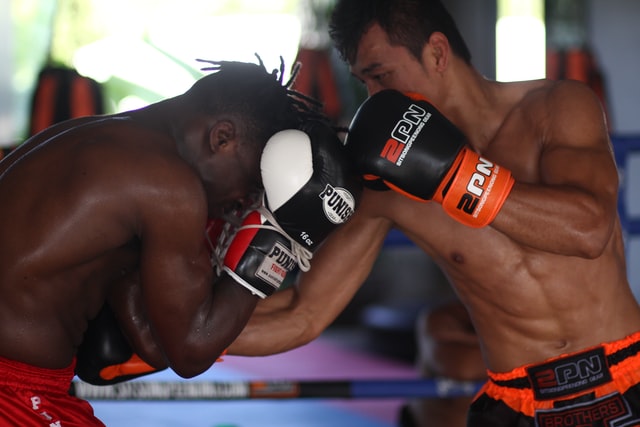
Muay Thai & Dutch Kickboxing training can be physically demanding.
Combination drills, clinch work, heavy-bag training, focus mitts, Thai pads, and conditioning exercises all challenge different parts of your body.
The more consistently you train, the more accustomed your body becomes to repeated physical exertion. You develop better cardiovascular conditioning, muscular endurance, balance, coordination, and overall physical resilience.
This doesn’t mean your body becomes invincible. Instead, you gradually become better prepared for the physical demands of training.
3. Clinch Training Strengthens Your Grip
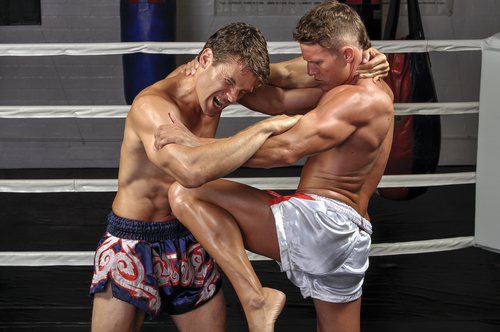
The Muay Thai Clinch is another area that can make you physically tougher.
When you’re fighting for position with a partner, you’re constantly working to control their posture, arms, head position, and balance. This can challenge your grip, forearms, shoulders, and upper body.
As your clinch experience improves, you can become more comfortable with the pressure and physical resistance involved in close-range fighting.
A stronger grip can also make it easier to maintain control when your partner is actively trying to escape or establish a better position.
4. Muay Thai Clinch Training Challenges Your Neck
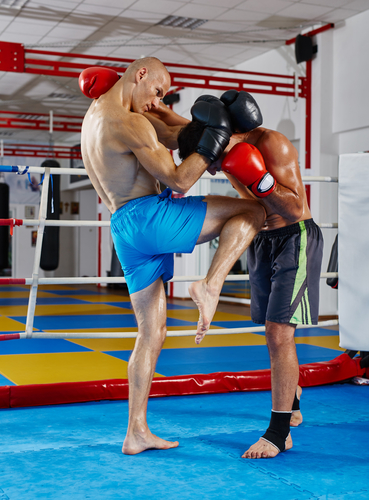
The Muay Thai clinch doesn’t just challenge your grip. It also requires you to maintain good posture and resist your partner’s attempts to control your head and neck.
During controlled clinch training, your neck and surrounding muscles may have to work to maintain position while your partner applies resistance.
However, neck training should be approached progressively. You shouldn’t intentionally overload or aggressively crank your partner’s neck simply to become tougher.
Proper technique and controlled resistance are more important than trying to prove how much discomfort you can tolerate.
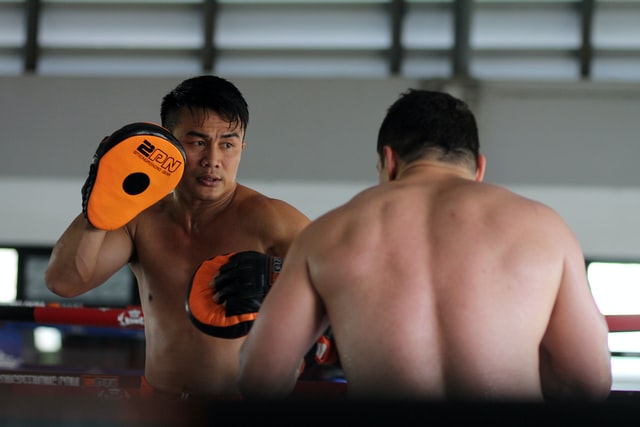
5. You Develop Mental Toughness
Perhaps one of the biggest benefits of Muay Thai and Dutch Kickboxing training is the mental challenge.
High-intensity combination drills can leave you exhausted. Your heart rate rises, your muscles become tired, and you may have moments when you want to stop.
Learning how to stay composed and continue performing your technique while tired can help develop mental resilience.
For example, your coach might have you perform several rounds of combination drills. By the final round, you’re exhausted—but you still have to keep your hands up, maintain your technique, move your feet, and listen to instructions.
That experience teaches an important lesson:
Being tired doesn’t necessarily mean you have to stop.
Over time, consistently working through challenging but appropriately scaled training sessions can improve your ability to stay focused when things become difficult.
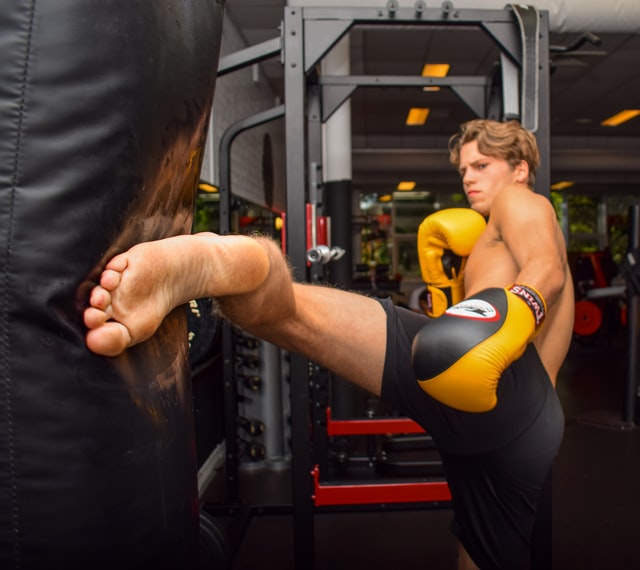
6. You Develop Strong Shins
Shin conditioning is a major part of Muay Thai and kickboxing training.
Repeatedly kicking heavy bags, Thai pads, and kick shields can help your body adapt to the impact involved in striking. Properly supervised partner drills can also introduce controlled contact.
However, shin conditioning shouldn’t be about deliberately damaging your bones or trying to create micro-fractures.
Instead, gradual adaptation comes from consistent training and appropriate exposure to impact. Proper technique, equipment, recovery, and progression all matter.
If you’re new to Muay Thai, don’t feel like you need to immediately kick as hard as possible. Developing good technique and gradually increasing training intensity is a much better approach.
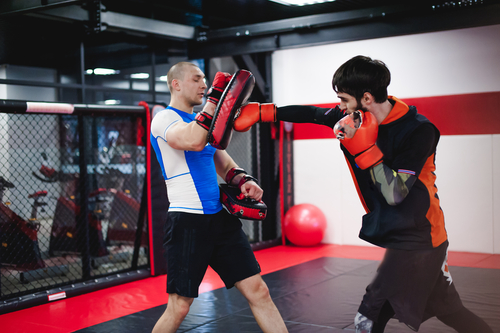
7. You Develop Explosive Hip Strength
Powerful Muay Thai and Dutch Kickboxing techniques rely heavily on your hips.
Roundhouse kicks, knees, and other striking combinations require you to coordinate your hips, legs, core, and upper body.
When you consistently practice these techniques on pads, bags, and during drills, you develop better coordination and become more efficient at generating force.
Over time, you may notice that your kicks and knees feel more powerful and controlled compared with when you first started training.
This improvement isn’t simply about becoming stronger. Technique, timing, balance, mobility, and coordination all contribute to developing effective striking power.
Muay Thai and Dutch Kickboxing Can Build More Than Physical Toughness
Muay Thai and Dutch Kickboxing have plenty of differences, but combining elements of both can create a well-rounded striking skill set.
The art of Muay Thai can teach you how to use punches, kicks, knees, elbows, and clinching together, while Dutch Kickboxing places a strong emphasis on aggressive boxing combinations combined with powerful kicks and knees.
The training can also challenge you physically and mentally.
Clinch work can test your grip and posture. Pad and bag work can challenge your conditioning. Repeated striking drills can improve your ability to handle physical contact. Hard rounds can teach you how to remain composed when you’re tired.
Most importantly, toughness shouldn’t be confused with simply accepting pain or unnecessary damage.
True toughness comes from being able to train consistently, handle challenges, stay composed under pressure, and keep improving without needlessly hurting yourself.
If you consistently practice Muay Thai and Dutch Kickboxing with proper coaching and progression, you can develop better conditioning, striking ability, physical resilience, and confidence both inside and outside the gym.
Have questions about Muay Thai or Dutch Kickboxing training? Leave a comment or send a message through our “Contact Us” page.

Muay Thai for Anxiety | 15 Types It Can Help Reduce
Anxiety can be one of the most uncomfortable feelings a...
Read More
Skipping for Boxing & Muay Thai | 7 Benefits for Improving Performance
Skipping for Boxing & Muay Thai, is one of the...
Read More
Taekwondo to Muay Thai | 8 Reasons Why the Transition Works
Transitioning from Taekwondo to Muay Thai can be an effective...
Read More
Kung Fu to Kickboxing | 5 Reasons it’s a Excellent Transition
After years of training in Kung Fu, some martial artists...
Read More
Hi there! I’m Austin Hoang, an editor and writer specializing in martial arts. As a lifelong martial artist, I have trained in various disciplines and competed in amateur boxing, wrestling tournaments, and Muay Thai/Kickboxing tournaments. Through my experiences, I aim to share valuable insights and ideas about martial arts. Thanks for visiting my page—I hope to inspire and educate you on the impact martial arts can have on life!

Pingback: Scary MMA Scenarios | How Scary Scenarios in MMA Improves Your...
Pingback: Taekwondo to Muay Thai | 8 Reasons Transitioning From Taekwondo to...
Pingback: Aggressive in Brazilian jiu-jitsu | The 6 Cons of Being Overly Aggressive...
Pingback: Anxiety | 15 Types of Them That Muay Thai Eliminate | By- MMAL
Pingback: Thai Rounds | Reasons You Should Try it in Muay Thai
Pingback: Kung Fu to Kickboxing - 5 Reasons Why Transitioning From Kung Fu to...
Pingback: Aggressive in Brazilian jiu-jitsu - The 6 Cons of Being Overly Aggressive...
Pingback: Taekwondo to Muay Thai - 8 Reasons Why Transitioning is Effective
Pingback: How Scary MMA Scenarios Improves Your Combative Style - By...
Pingback: Muay Thai & Kickboxing Tournament | 5 Lessons From it? - By...
Pingback: Giorgio & Armen Petrosyan | 5 Reasons to Attend Their Seminar - Mixed Martial Arts Lifestyle
Pingback: Firas Zahabi | 6 Reasons To Attend His Jiu-Jitsu Seminar - Live MMA