 Skip to content

Boxing may look simple from the outside, but learning proper boxing technique requires time, repetition, coordination, and practice. Beginners have to learn how to combine footwork, punches, head movement, defense, combinations, and strategy while staying balanced and relaxed without doing the “13 Common Boxing Mistakes Beginners Make When Training” that we’re going to talk about.
It is completely normal to make mistakes when learning boxing. In fact, making mistakes is an important part of improving. The key is to recognize those mistakes, understand why they happen, and gradually develop better habits through consistent training.
Whether someone is completely new to boxing or has been training for a while, there are several common boxing mistakes that can slow down progress.
Here are 13 common boxing mistakes beginners make when training and how to correct them.
Table of Contents
13 Common Boxing Mistakes Beginners Make When Training
1. Tensing Up During Movement and Footwork
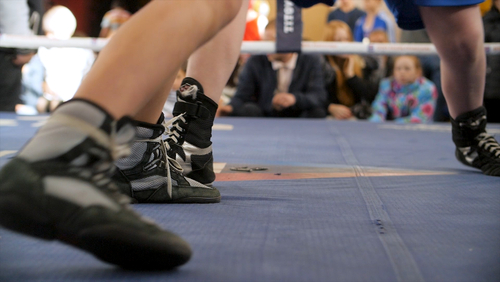
Beginners often have tense movement and footwork because staying light on the feet is unfamiliar at first. Nervousness can also cause a boxer to become stiff and rigid.
When the body is tense and the feet become heavy, movement becomes less efficient and fatigue can set in faster.
Boxers should practice staying relaxed while maintaining a strong stance. Developing light and efficient footwork can make it easier to move, create angles, maintain balance, and react to an opponent.
The goal is not to bounce excessively around the ring. Instead, focus on controlled movement while keeping the feet underneath the body.
2. Standing Flat-Footed
Standing flat-footed is another common boxing mistake, especially among beginners.
When a boxer becomes planted on the floor, it can make movement, pivots, and changes in direction feel slower. Good boxing footwork requires the boxer to remain balanced and ready to move in any direction.
Practicing controlled footwork can help develop better mobility and make it easier to create angles while attacking or defending.

3. Throwing Tense Jabs
The jab is one of the most important punches in boxing, but beginners sometimes make the mistake of throwing it with too much tension.
A good jab requires coordination between the stance, shoulder, arm, hand, and overall body position. The punch should be sharp and controlled rather than unnecessarily stiff.
Relaxation is particularly important because excessive tension can slow down punches and cause unnecessary fatigue.
Spend time drilling the jab repeatedly so the movement becomes more natural. Speed, accuracy, timing, and power can then develop through consistent practice.
4. Not Fully Extending Straight Punches
Another common mistake is not properly extending the straight punches such as the jab and cross.
Some beginners stop their punches too early because they are worried about overextending or because the correct punching range has not yet become familiar.
A straight punch should travel toward the target with proper technique and control. However, full extension does not mean locking or hyperextending the elbow.
Working with a qualified boxing coach or training partner can help determine the appropriate range and improve punching mechanics.

5. Performing a Improper Lead Hook
The lead hook is another punch that can take time to master.
A common mistake is throwing the hook on an incorrect diagonal path or allowing the punch to become too wide and predictable. This can affect balance, reduce efficiency, and potentially create openings for counters.
Instead, practice developing a compact, controlled hook while maintaining a strong defensive position. After throwing the punch, bring the hand back into position rather than leaving it extended.
Good boxing technique is not only about generating power. It is also about being able to attack while remaining prepared to defend.
6. Loading Up Too Much On Hooks & Uppercuts
Trying to generate maximum power by excessively loading up on hooks and uppercuts is another common boxing mistake.
Although loading up can make a punch feel more powerful, it also makes the movement easier to read. Large movements can take longer to execute and may create opportunities for an opponent to counter.
During sparring, an experienced opponent can recognize these exaggerated movements and take advantage of them.
Instead of trying to generate power by winding up, focus on proper technique, timing, weight transfer, hip rotation, and accuracy. Powerful punches do not always need a large motion.

7. Not Using Head Movement After a Combination.
Some boxers finish a combination and immediately remain in the same position.
This can become a dangerous habit because throwing a combination does not mean the opponent will simply stand there. A counterpunch can come immediately after the combination.
After finishing a combination, consider using appropriate defensive movements such as:
- Slipping
- Rolling
- Pulling
- Pivoting
- Moving out of range
- Returning to a strong defensive stance
The exact movement depends on the situation, but developing defensive habits after combinations can help make boxing technique more complete.
8. Squaring Up the Boxing Stance
Another common boxing mistake is allowing the stance to become too square.
A poor stance can negatively affect balance, mobility, punching mechanics, and defense. It can also make it more difficult to move efficiently around an opponent.
A strong boxing stance should allow the boxer to remain balanced while being ready to punch, defend, or move.
Rather than constantly focusing on having a perfect-looking stance, beginners should learn how to maintain a stable position while moving naturally.
A strong stance provides the foundation for effective boxing footwork, punching, head movement, and defense.

9. Over-Slipping by Moving the Hips Too Far
Head movement is an important part of boxing defense, but beginners sometimes move too much when slipping punches.
A slip is designed to move the head away from the centerline while maintaining balance and a strong defensive position. Excessive side-to-side movement can make the technique inefficient and cause the boxer to lose balance.
The movement does not need to be dramatic. A relatively small movement can be enough to take the head off the centerline.
Focus on keeping the movement controlled and returning to a balanced position after the slip.
10. Leaning Too Far Back When Pulling To Avoid A Jab
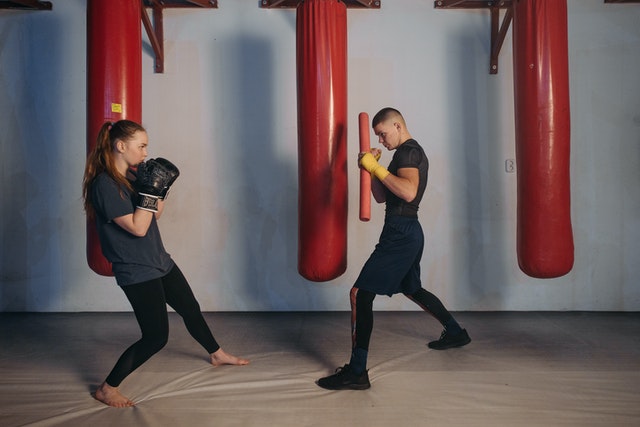
Pulling back can be useful for avoiding a straight punch, but leaning excessively backward is a common mistake.
If the boxer leans too far away, balance can become compromised and it may become difficult to immediately counter or move.
Instead, practice controlled defensive movement while keeping the body balanced and ready to respond.
A boxing coach can help determine whether the movement is appropriate for the boxer’s stance, distance, and level of experience.

11. Dropping the Hands
Keeping the hands up is one of the most basic defensive habits in boxing, yet it is also one of the most common mistakes.
Beginners may drop their hands because they become tired, distracted, or simply have not developed the habit of maintaining their guard.
Some experienced boxers have developed defensive styles that involve keeping their hands lower, but these techniques require excellent timing, awareness, reflexes, and experience. Beginners should not try to imitate advanced defensive styles without understanding the risks involved.
For most beginners, keeping the hands in a strong defensive position provides a much more reliable foundation while learning boxing.

12. Keeping the Chin Up
Keeping the chin high while drilling combinations or sparring is another important mistake to correct.
A boxer should avoid unnecessarily exposing the chin because it can leave the head in a vulnerable position.
Beginners should practice maintaining a controlled head position while keeping the hands up and staying balanced.
This does not mean forcing the chin aggressively toward the chest. Instead, develop a natural defensive posture that protects the head while still allowing clear vision and proper movement.

13. Not Rotating Feet & Hips When Punching
One of the biggest mistakes beginners make is trying to generate punching power primarily with their arms.
Effective punching involves coordination throughout the body. Depending on the punch, the feet, hips, torso, shoulders, and arms all contribute to efficient force production.
For example, the cross typically involves rotation through the rear foot, hips, and torso while the arm delivers the punch.
Learning how to coordinate these movements can improve punching power, balance, and efficiency.
However, beginners should prioritize proper boxing technique over trying to punch as hard as possible. Power will develop naturally as technique, coordination, and timing improve.
Conclusion
Making mistakes is a normal part of learning boxing. Nobody develops perfect technique overnight, and even experienced boxers continue working on the fundamentals throughout their training.
The “13 common boxing mistakes“ discussed in this article include problems with footwork, punching technique, stance, head movement, defense, and body mechanics. Recognizing these mistakes is the first step toward correcting them.
Instead of becoming frustrated when something goes wrong, use mistakes as opportunities to identify areas that need improvement. Consistent drilling, quality coaching, controlled sparring, and patience can help build better boxing habits over time.
Whether the goal is fitness, self-defense, competition, or simply learning a new skill, developing solid fundamentals is one of the most important parts of boxing training.
What other common boxing mistakes have you noticed while training? Leave a comment or send us a message to share your thoughts.


Improve in Boxing: 7 Simple Steps To Improve Your Boxing Style
There’s no secret formula that will instantly help you improve...
Read More
Skipping for Boxing & Muay Thai | 7 Benefits for Improving Performance
Skipping for Boxing & Muay Thai, is one of the...
Read More
5 Boxing Bag Exercises That Will Skyrocket Your Conditioning
When it comes to boxing conditioning days, intense sweat is...
Read More
Boxing Footwork | 5 Reasons Why It’s Important To Learn About it First
Footwork is so important to learn first in boxing! This...
Read MoreYou May Also Like:


Hi there! I’m Austin Hoang, an editor and writer specializing in martial arts. As a lifelong martial artist, I have trained in various disciplines and competed in amateur boxing, wrestling tournaments, and Muay Thai/Kickboxing tournaments. Through my experiences, I aim to share valuable insights and ideas about martial arts. Thanks for visiting my page—I hope to inspire and educate you on the impact martial arts can have on life!

Pingback: Boxing Footwork - 5 Reasons Why it's Important to Learn About Footwork...
Pingback: Boxing Drills | 9 Techniques You Can Practice At Home
Pingback: Improve in Boxing | 7 Simple Steps To Improve Your Boxing Style - Mixed...