Boxing | 12 Ways To Stay In Shape During School

Boxing | 12 Ways to Balance Boxing While in School

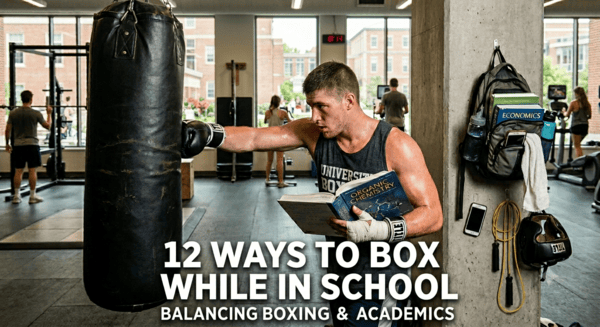
Balancing boxing training with school can be challenging. Between assignments, exams, and busy schedules, many students struggle to make it to the boxing gym consistently. However, staying in shape for boxing while attending school is still possible with the right approach.

During his university years, the author often found himself unable to attend regular boxing classes because of academic responsibilities. Instead, he focused on cardiovascular conditioning, functional training, and boxing-specific exercises whenever he had free time at the campus gym.

By staying consistent with these workouts, he was able to maintain his conditioning and return to boxing training without losing much progress. Here are 12 ways students can stay in shape for boxing while balancing school.

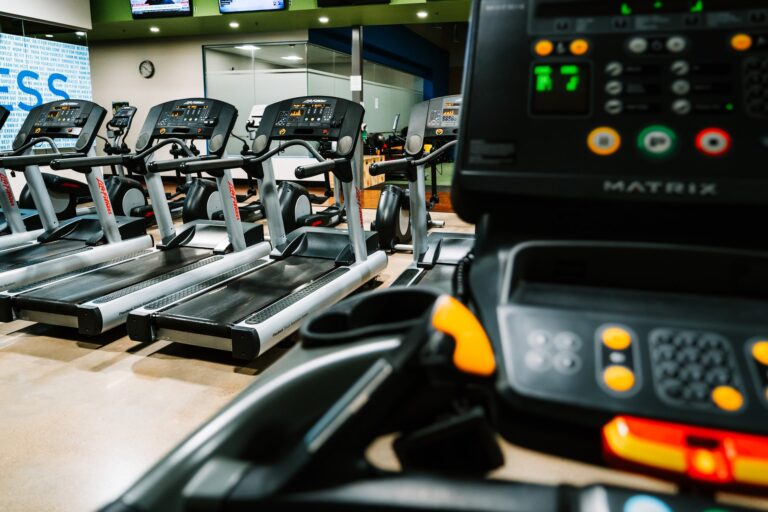
Treadmill Work for Boxing

1. Treadmill Running

Running on the treadmill is one of the best ways to improve cardiovascular endurance for boxing. During university, the author regularly ran between three and five miles to maintain his conditioning.

Long-distance runs helped prepare him for demanding boxing conditioning circuits and intense sparring sessions.

Benefits:

  • Builds cardiovascular endurance
  • Improves stamina
  • Helps prepare for sparring rounds
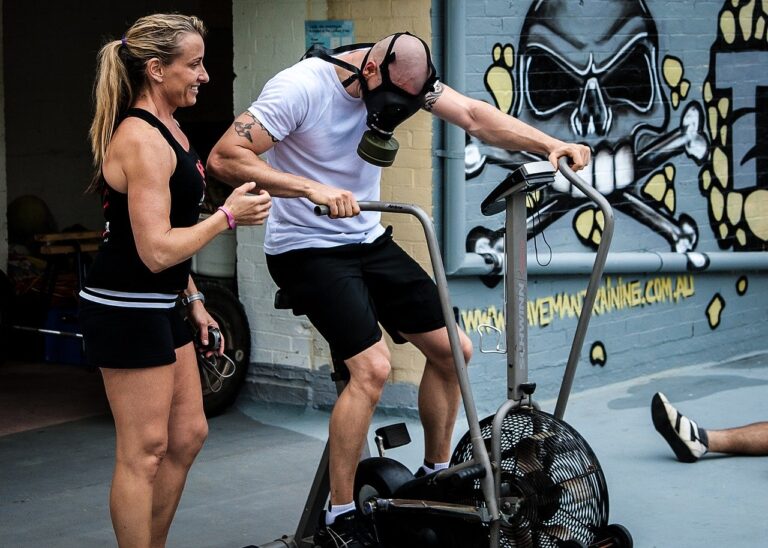
Air-Dyne Work for Boxing

2. Assault Bike Intervals

No matter how fit someone is, the assault bike can provide a brutal conditioning workout. Interval training on the air bike is an excellent way to improve lung capacity and endurance.

Two favorite interval protocols included:

  • 10 rounds of 20 seconds hard / 10 seconds easy
  • 10 rounds of 30 seconds hard / 20 seconds easy

These sessions often left the legs burning and breathing heavily, but they provided tremendous benefits for boxing conditioning.

Benefits:

  • Develops anaerobic endurance
  • Improves cardiovascular fitness
  • Strengthens the legs
Battle Ropes for Boxing

3. Battle Ropes

ttle ropes are an excellent exercise for building upper-body endurance and cardiovascular fitness. After only 30 seconds, the shoulders begin to burn, making them a great tool for boxing conditioning.

The shoulder endurance developed from battle ropes helps boxers maintain fast punches during heavy bag work and conditioning circuits.

Benefits:

  • Builds shoulder endurance
  • Improves conditioning
  • Enhances punching stamina
Skier Exercise for Boxing

4. Skier Machine

Although not every gym has one, the Skier is another outstanding cardio machine for boxers.

Just like the air bike, interval training on the Skier pushes the body through fatigue while strengthening both the upper and lower body.

Benefits:

  • Improves cardiovascular fitness
  • Increases muscular endurance
  • Provides a low-impact conditioning workout
Agility ladder for Boxing

5. Agility Ladder

Footwork is one of the foundations of boxing. During school, having access to an agility ladder allowed the author to practice the footwork drills taught in class.

Agility ladder drills improve speed, coordination, and movement efficiency inside the ring.

Benefits:

  • Enhances footwork
  • Improves agility and speed
  • Develops coordination
Skipping for Boxing

6. Skipping

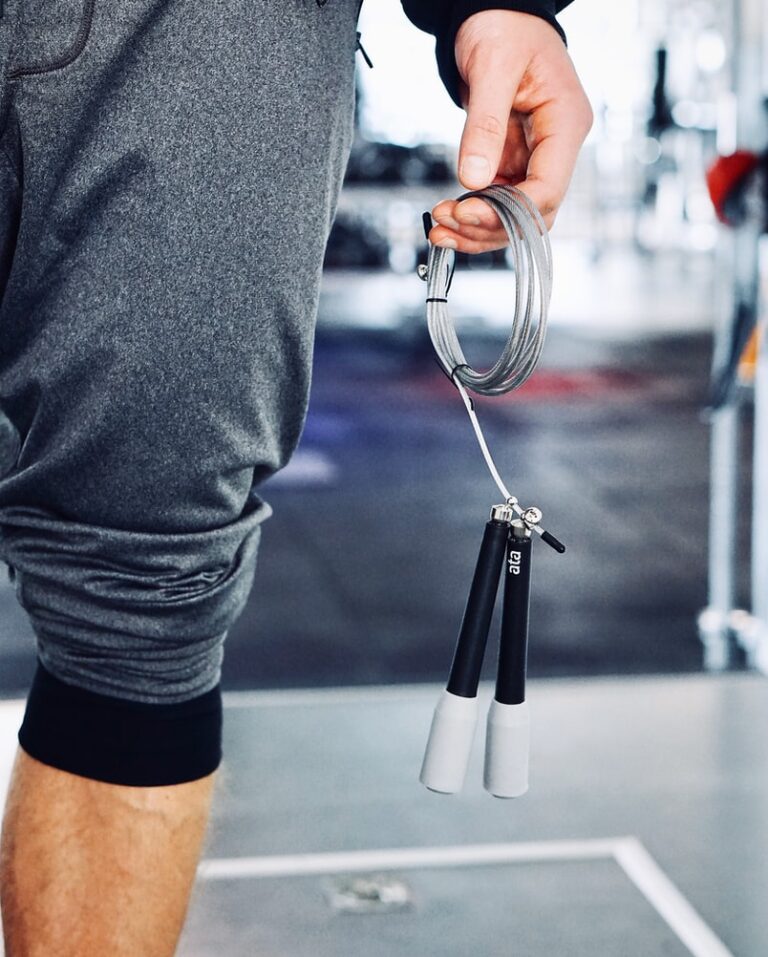
Jump rope training is a staple in boxing. Since skipping was part of every boxing warm-up, the author continued the habit while attending school.

Besides improving cardiovascular endurance, skipping rope develops:

  • Footwork
  • Rhythm
  • Timing
  • Coordination

Benefits:

  • Improves cardio
  • Develops footwork
  • Builds coordination and timing
kettlebell, fitness, crossfit

7. Kettlebell Training

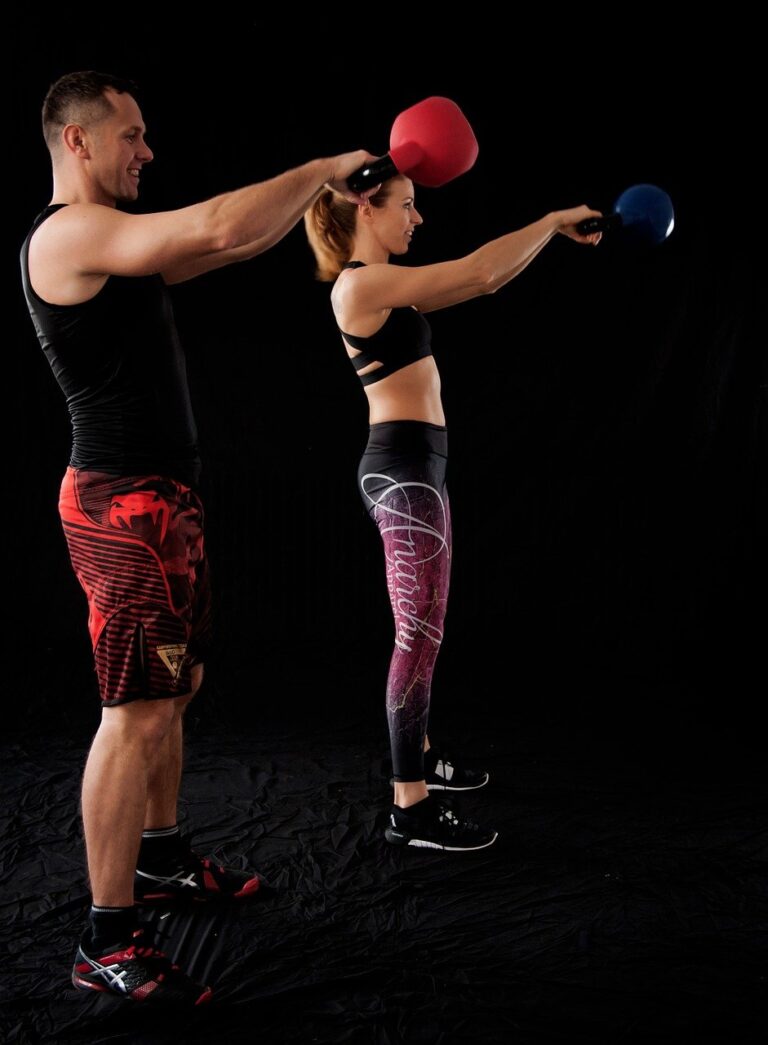
Punching power originates from the legs, hips, and core. Kettlebell training helped maintain explosive strength in those areas.

Exercises such as swings, goblet squats, and cleans provided functional strength without adding excessive muscle mass.

Benefits:

  • Builds explosive power
  • Strengthens the hips and core
  • Supports punching power
Medicine ball slams for Boxing

8. Medicine Exercises

Medicine ball workouts combine explosive strength with cardiovascular conditioning. This type of training closely resembles the demands of boxing, where athletes repeatedly generate power while under fatigue.

Medicine ball exercises can also help improve rotational strength, which contributes to punching power.

Benefits:

  • Develops explosive strength
  • Improves endurance
  • Builds rotational power
Calisthenics for Boxing

9. Calisthenics

Bodyweight exercises are an effective way to maintain strength without sacrificing speed. Rather than focusing on building muscle mass, the author used calisthenics to strengthen the body and joints.

Favorite exercises included:

  • Push-ups
  • Diamond push-ups
  • Dips
  • Squats
  • Glute bridges
  • Pull-ups
  • Chin-ups
  • Lunges

Research suggests that bodyweight training can improve joint stability and overall functional strength, reducing the risk of injury.

Benefits:

  • Builds functional strength
  • Improves joint stability
  • Maintains speed and endurance
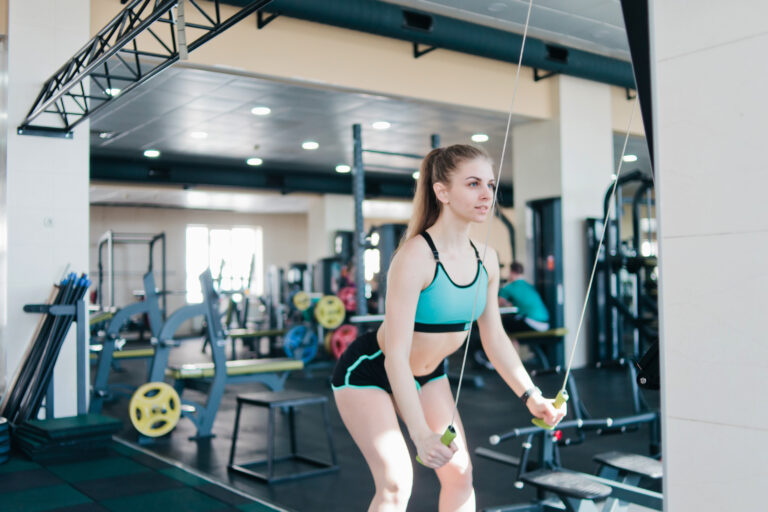
Abdominal Exercise for Boxing

10. Core Training

A strong core is essential for boxing performance. To maintain abdominal strength, the author regularly performed:

  • Leg raises
  • Crunches
  • Sit-ups
  • Planks
  • Russian twists

Strong abdominal muscles help absorb body shots and transfer power efficiently during punches.

Benefits:

  • Strengthens the core
  • Improves power generation
  • Supports injury prevention
Shadowboxing for Boxing

11. Boxing Drills & Technique Practice

Conditioning is important, but technical development should not be ignored. Whenever gym attendance wasn’t possible, the author practiced techniques learned from his coach at home.

Without a partner, most of the drills were performed through shadowboxing, allowing him to maintain sharp fundamentals and muscle memory.

Benefits:

  • Maintains technique
  • Reinforces fundamentals
  • Improves muscle memory

12. Shadowboxing

Shadowboxing is one of the simplest and most effective ways to stay sharp for boxing.

Performing several rounds while imagining an opponent allows boxers to combine footwork, defense, combinations, and movement in a realistic setting. Over time, techniques become more natural and fluid.

Benefits:

  • Sharpens technique
  • Improves movement and rhythm
  • Mimics sparring situations

Conclusion

Trying to stay in shape for boxing while attending school can be difficult, but it is far from impossible. With proper time management and access to basic gym equipment, students can maintain their conditioning and continue improving even during busy academic periods.

Throughout his college years, the author relied on these 12 exercises to stay prepared for boxing. By rotating workouts and adjusting training volume based on his schedule, he was able to remain in shape despite academic demands.

Consistency—not perfection—was the key. Even short workouts between study sessions made a significant difference and helped ensure a smoother return to regular boxing training.

How do you stay in shape for boxing while balancing school or work? Share your experiences in the comments below.

Share

3 thoughts on “Boxing | 12 Ways To Stay In Shape During School”

  1. Pingback: Kickboxing | How to Get Your Kickboxing Training in While in School

  2. Pingback: 5 Boxing Bag Exercises to Enhance the Cardiovascular System (2019)

  3. Pingback: Kickboxing - How to Get Your Kickboxing Training in While in School

Leave a Comment

Your email address will not be published. Required fields are marked *